Hello, hello! If you’re just starting your art journey, this is the perfect tidbit for you!

Practice makes perfect. We’ve all heard it, and according to Malcolm Gladwell, it takes ten thousand hours to master a skill. So, if you want to improve your art, spend at least ten minutes every day bent over your sketchbook and you’re guaranteed to see a lot of improvement, right? Well, no, not necessarily.
The ten thousand hour rule—while undeniably catchy—is a myth, and if you take it to Google, you’ll see it has been debunked in a number of ways, chiefly because it’s based in the quantity of time spent practicing rather than the quality of the practice. Of course, drawing consistently is important. You can’t expect to master something if you don’t dedicate enough time to it, but you can also find yourself wasting a great deal of your time practicing in the wrong way, which is the hole I’ve fallen into many times.

If you’re anything like me, you get easily frustrated when a sketch of yours is not looking like how you want it to, so you drop your pencil and step away to take a break. Then, when you go to try again, the same thing happens; you’re beside yourself trying to work out how hours of blood and sweat—and even keeping a reference handy, for God’s sake—have left you with a sketch this heinous. So, you drop your pencil, chuck your sketchbook into the drawer or into the oven, rinse and repeat. Before you know it, a month has passed and your art is no better than it was. This is exactly how I would end up in a stupor, going weeks without attempting to draw anything at all, not even so much as a stick figure. My frustration with myself was palpable, and what I realized later on is that I was unintentionally setting myself up for failure every single time I picked up my pencil.
When you go to start a sketch, even if you’re using a reference to guide the process, you’re effectively wading out into deep waters, determined to learn to swim on your own. With time, of course, you will improve in some small ways, but not without plenty of panicking, your head going under, and your fingers gripping the lip of the pool so that you don’t swallow more chlorine. Now, if you had spent that time with a swimming instructor, you’d be much more buoyant, wouldn’t you? So, what is the swimming instructor in this analogy? Art studies, that’s what.
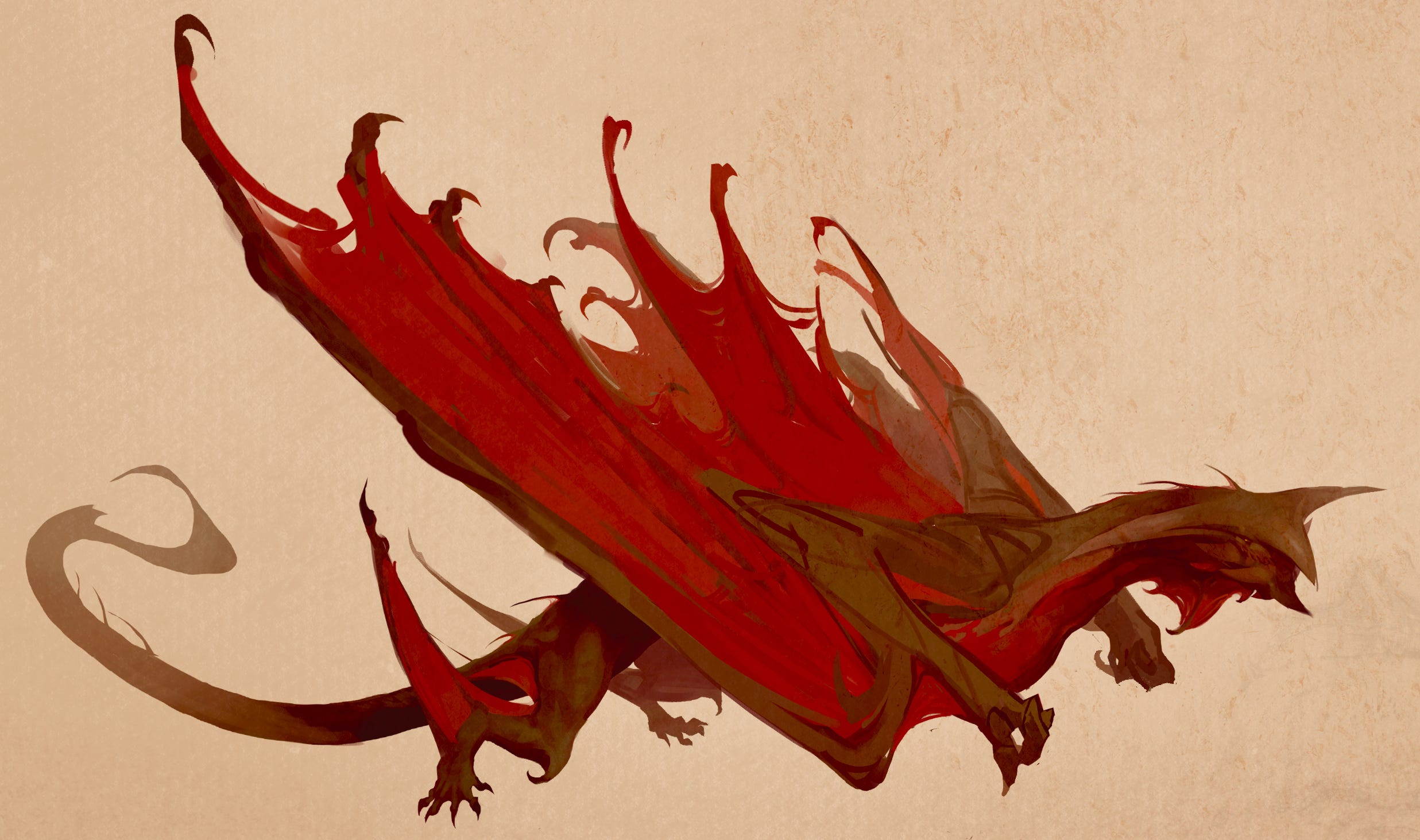
Ignore the golden rule of art for now, which is to never copy another artist, and start copying the artists you want to emulate. Don’t worry, you will find your style along the way! Start a Pinterest board dedicated to developing your artistic eye. Make it a vibrant collage of the styles and effects you find to be extremely desirable in the art of others, things you want to eventually program into your own unique process. Don’t forget to hunt for your favorite artists on places like Instagram or TikTok, either! Then, for each study you do, decide which facet you want to focus on. Art is broken down into many pieces. To keep this simple, those pieces are the linework, shapes, colors, and textures. So, do you want to study the linework of a piece or maybe another facet? This isn’t a hard and fast rule you have to follow with each exercise. I know I definitely didn’t, but be prepared to dedicate a whopping amount of time to a single exercise if you want to try and fully render a piece detail-for-detail. It’s rewarding, and it will certainly teach you a lot, but it won’t be remotely easy in the beginning.
I think I’ve done more studies that actual original work by this point, which is hysterical. Sadly, I can’t post these here to show you, but I wish I could. My first were grueling. I spent anywhere from six to nine hours on my first studies. There were many hair-pulling moments, but each one was noticeably easier than the last. Studying art is a muscle that needs to be worked. The more you work it, the stronger it gets, and after you’ve done a handful of in-depth studies, whether those are focused on individual facets or complete recreations of a complex piece, you’ll begin to notice that you can not only understand how artists achieved certain effects in their finished works, but you’ll even be able to dissect how they did it. It will feel like magic, but it isn’t magic at all. Each second you spend on a study, your brain is doing feverish work to develop its own process, which brings me to a very important point: when you study art, do not be a human printer. Instead, consciously break down the piece to its raw materials and build it back up again from scratch. That’s what a study is: figuring out how the artist did what they did so that you can develop your technique.
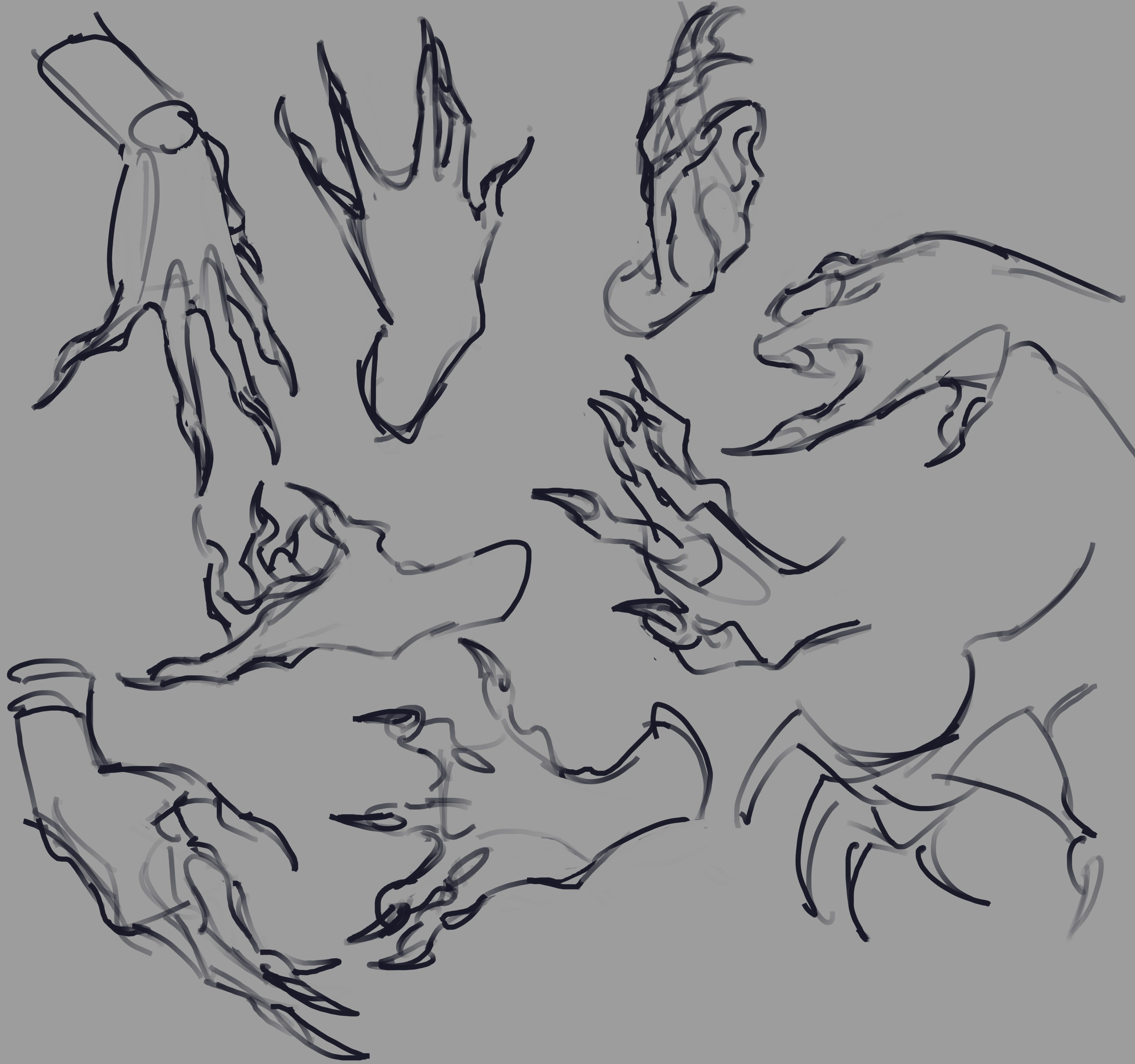
As an extra little piece of advice, I recommend that you take a basic geometric shape of your choice (or, better yet, a combination of shapes) and use it to map the proportions of any and every drawing you study. I often use triangles, which are notoriously perfect building blocks in the art world. You can piece together triangles of various sizes and overlap them however you need to make something as intricate as a hand or as broad as a character’s dynamic pose. I find that they’re far more useful than squares or circles when it comes to creating a design that’s visually striking and stylized, but any combination will work. Geometric shapes are the core structures for any organic, asymmetrical form, and they will guide your linework and educate you on proper proportions as a beginner. After all, when you’re just starting out, you have no idea where anything is supposed to go or how big anything is supposed to be. You think you know, but that knowledge is lost in translation as soon as the pen hits paper—or, in my case, as soon as the Apple Pencil hits the slippery iPad screen.
Remember, allow for imperfections, for mess, for asymmetry on your journey. Allow yourself the space and the time to learn.