

Hello, hello! If you’re just starting your art journey, this is the perfect tidbit for you!
When we set off to try our hand at something new, we envision the final product, the end goal, but not the process between here and there. We fashion our dreams as uninformed optimists; after all, you simply can’t be prepared for what you haven’t tried. You need to get your feet wet, and that’s where things get ugly, where disillusionment sets in like a bad cold.
This is exactly the case with art. You know what you want to create and you believe you can create it—just like we all think we can draw a hand before realizing we’re sorely mistaken. You haven’t the slightest clue what learning is really going to look like or what incredible sketches actually start as. If you want a hint, the answer is uuuugly. Quite ugly.
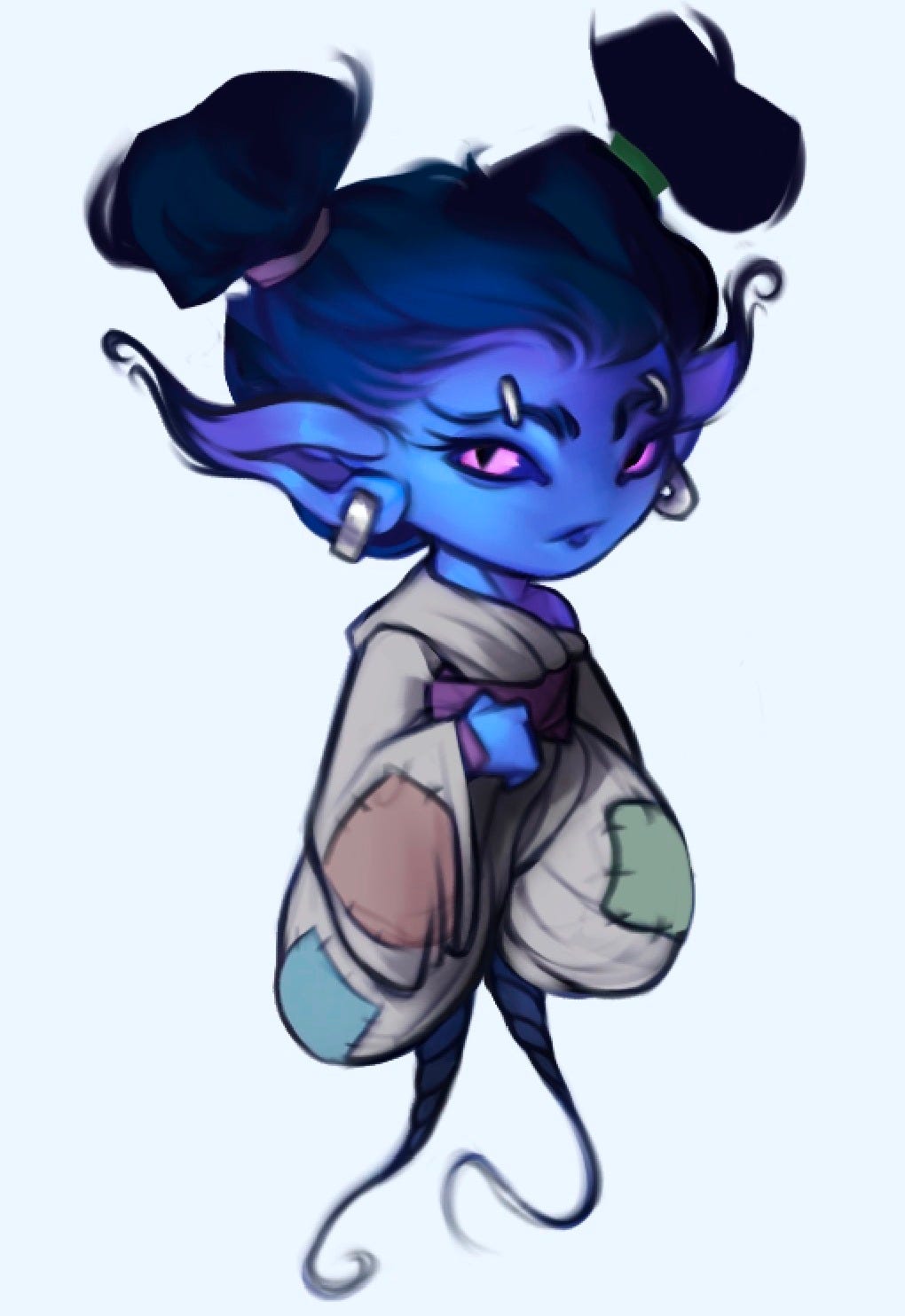
I still consider myself an amateur artist, but when I was a real beginner-beginner, an ugly concept sketch was my nightmare. I would agonize over my work, trying to force each line to look like the masterpiece I envisioned in my head. I refused to let them be ugly and, in doing so, I know I stunted my own progress. Eventually, I taught myself to get comfortable with the process.
See, art is a butterfly; it has to cocoon, to refine itself and steadily evolve from a gooey mass into its final and beautiful form. In other words, you have to let your art start ugly, because it will, whether you want it to or not. Below, I have a recent example from my own work.
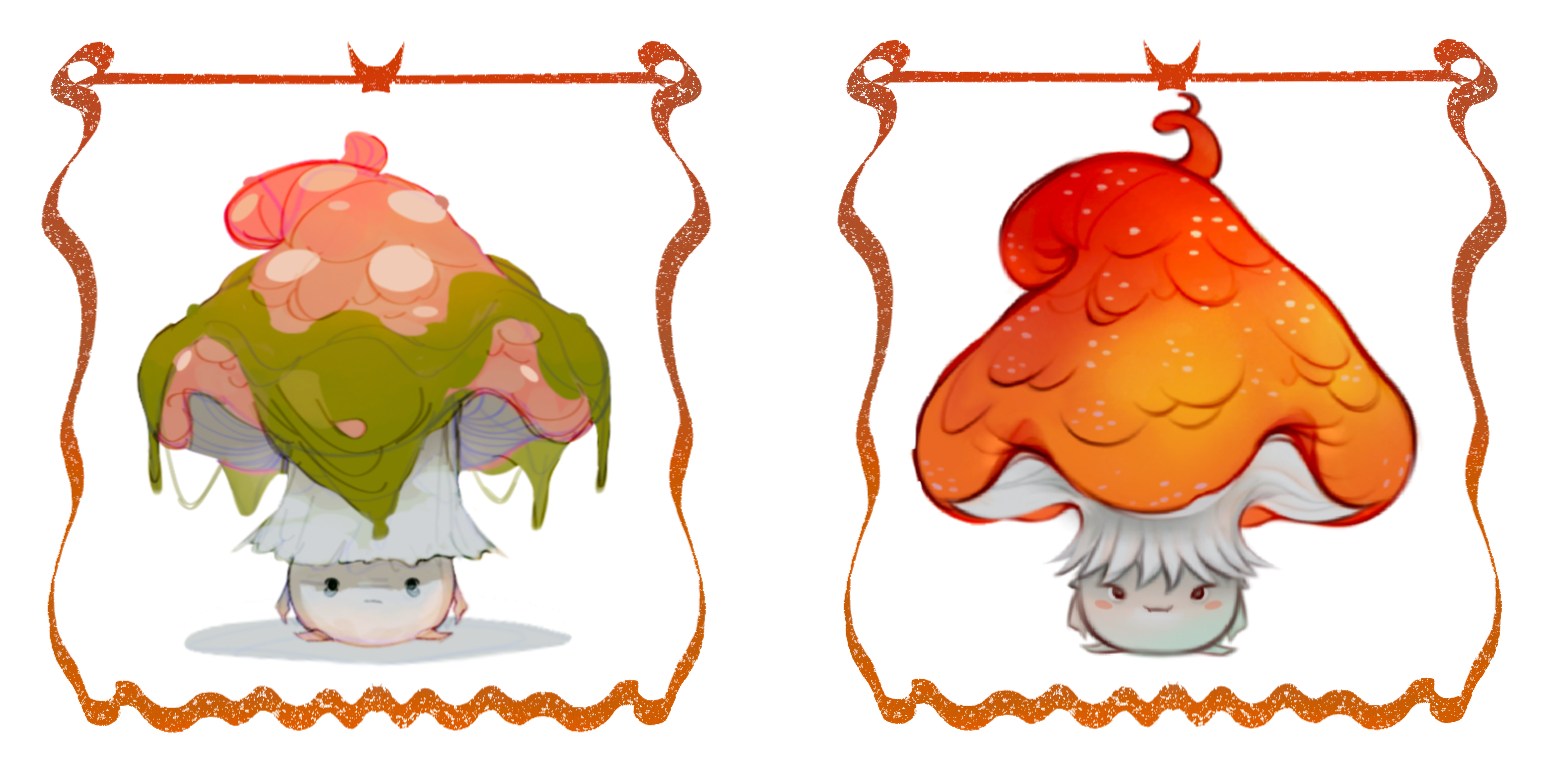
I’ve been playing around with creature concepts, and my very first piece was the mossy fellow on the left there. His name is Mungler, if you were wondering. I wasn’t particularly pleased with the first rendition of Mungler, but I allowed him to be what he was—a little bit uggers. He gave me a platform to build off of, to learn from, to sculpt. Like they say with writing, you can’t edit a blank page.
After that initial sketch, I went back and changed quite a bit about him, and he morphed into the fellow on the right. A lot changed, as you can see, but it didn’t stop there. I went back and reformed him a third time, and he became the spiteful little devil right below that looks like he’d bite you for fun, which he most certainly would.

So, if you’re a new artist, let it be ugly. Let it be what you weren’t envisioning, because it has to start there. As I’ve said in a previous post, don’t torture your art. It’s in the mess that your skills develop even when you don’t feel like they are. It takes time to notice progress, so give yourself—and each sketch—that time to develop.
You will improve. That’s a promise.
Thank you for reading! If you enjoyed this post, you may like this one as well, where I discuss the best way to improve your art fast.
Study the Masters

Practice makes perfect. We’ve all heard it, and according to Malcolm Gladwell, it takes ten thousand hours to master a skill. So, if you want to improve your art, spend at least ten minutes every day bent over your sketchbook and you’re guaranteed to see a lot of improvement, right? Well, no, not necessarily.
I love this reframing of “ugly” as necessary rather than shameful. There’s something so freeing about allowing the early drafts to be exactly what they are. I'm still learning to trust this. Growth really does happen in the mess, even when we can’t see it yet. Beautifully said. 💚